

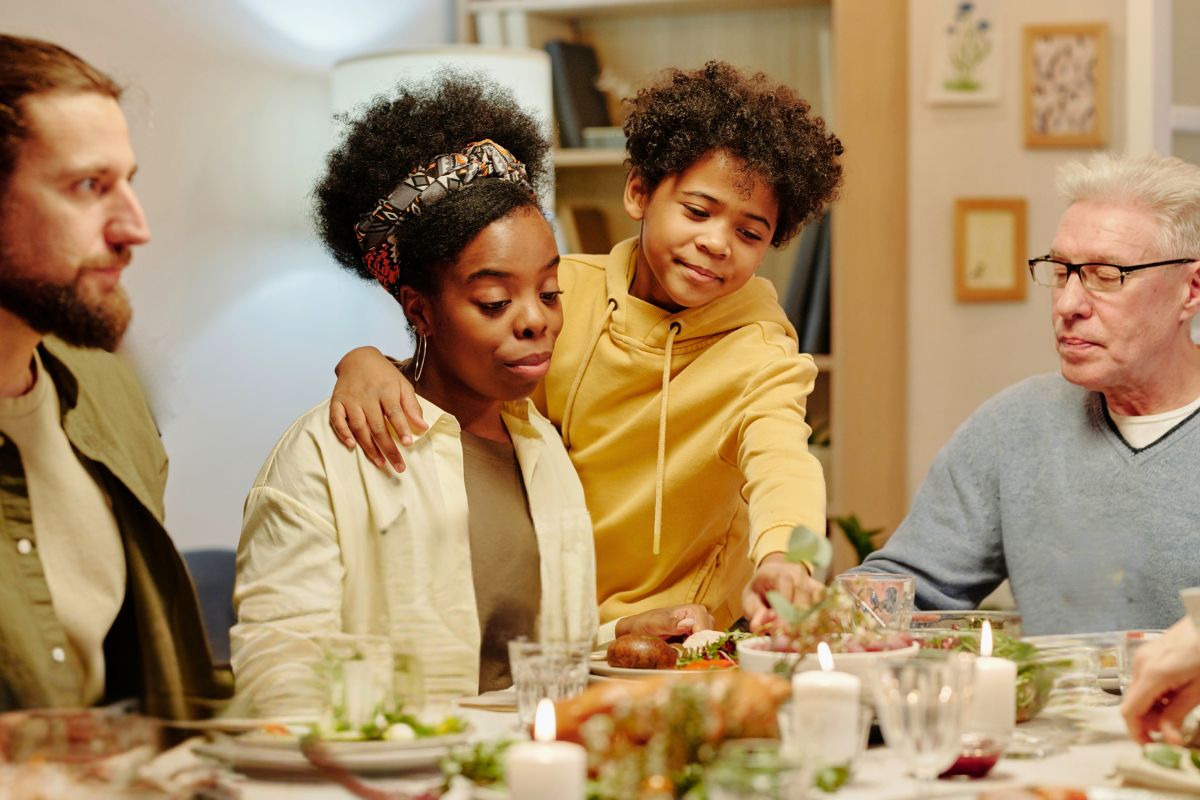
The holidays can feel comforting and complicated at the same time. There’s the warmth of familiar faces, but also the old dynamics that tend to show up when everyone’s in the same room again. Some people feel pressure to act cheerful. Others try to manage routines that no longer fit, or expectations that leave little room for how they’re actually doing.
Many families are navigating blended households, strained relationships, or big emotions beneath the surface. And even with the best intentions, it’s easy to slip back into patterns that make the season harder than it needs to be.
To help you move through it with a little more steadiness, our LifeSpeak experts answered common questions about handling challenging family moments. Their insights offer simple, supportive ways to set boundaries, protect your energy, and approach gatherings with less tension.
Sibling Dynamics
I don’t get along with my siblings. We’re all adults now but have very different personalities and we can never seem to agree on anything. How can I handle having to spend days with them over the holidays?
Setting boundaries is an act of love. Take some time to get clear on how much you want to see your siblings over the holidays, and then communicate that in a loving way. When you are pushed beyond your boundaries, that is how resentment builds. Avoid resentment by knowing your boundaries and communicating with them. Consider different options – maybe seeing siblings every other year – take the time to figure out what feels best for you.
Allison Villa, Registered Psychotherapist and Relationship Expert
“Setting boundaries is an act of love.”
Helpful to remember:
• boundaries prevent resentment from building
• you can choose what feels manageable for you
• small changes, like shorter visits, can shift old patterns
Divorce
My parents have been divorced since I was 10, and I now have my own teenagers. Every year, my mother expects us to spend Christmas with her and gets angry when I choose to spend it with my father. She says she wants to see the grandkids. This makes me very uncomfortable and angry – this is the legacy of divorce, and is not my fault. How can I explain this to her?
I’ve been there, I know that’s hard. I think in this case you just have to put your foot down and say, “This is what I’m going to do, and I’m not going to discuss this with you again. Period. Conversation over.” Of course, this will all come out politely and respectfully. During this conversation, let her know that while you understand it is hurtful for her that you aren’t there with her every Christmas, it is hurtful for you that she puts that expectation on you. Again, this is one of those “this is how it’s going to be, and don’t ask me again” kind of conversations. If you don’t do that with her, she’ll continue to ask. You have to set boundaries, even if your boundaries might hurt her. In the end, it’s not you hurting her; it’s her own perception of the situation that’s causing her pain. And you can’t fix that for her. That has to be her own issue to solve. Don’t take on her issues.
Catherine Mattice, MA, International Speaker, Consultant, Coach
Helpful to remember:
• Someone else’s reaction is not your responsibility
• Clear limits prevent the pattern from repeating
• It’s okay to protect your emotional wellbeing
Aging Parents
I am struggling to deal with my guilt and depression this holiday season. My mother is in long-term care, and my father is in a retirement home. At this stage, it looks like they will be unable to leave their residences to celebrate Christmas. How do I deal with my feelings of inadequacy because I can’t fix this for them?
I feel how much you love your parents and want to care for them during this time. It’s hard when these choices are not within your control. I’m curious why you feel that it is your inadequacy that is causing them to be unable to leave their residences? Does this come from within you, or from them? The best gift that you can give your parents is to care for your emotional and physical wellness so that you can bring more joy into their world (whether that is from afar right now, or in person down the road.) Give yourself permission to take care of yourself, and you will have so much more to give to them.
Allison Villa, Registered Psychotherapist and Relationship Expert
“Give yourself permission to take care of yourself.”
Helpful to remember:
• you’re not responsible for circumstances outside your control
• caring for yourself strengthens your ability to care for others
• love and presence matter more than perfect holiday plans
In-Law Tension
How can I effectively deal with in-laws who bring up politically divisive topics during dinner, causing tension at the table due to our differing opinions?
This is a really tough issue, and a lot of people are worried about this one. I suggest frontloading everyone before the event and agreeing not to talk about politics or other divisive issues. Set the tone that the holidays are for sharing, laughing, and enjoying each other, not arguing. If they start, gently say, “I really get that you have strong views on this, and I can see how much you want to talk about…. Everyone is entitled to their views, but I am going to opt out of this discussion.” Then, try to change the subject or use distraction. Stay neutral and try not to engage. Some family members are looking for the adrenaline rush of an intense argument, so staying calm will make you a very boring opponent. Also, appeal to their good side and find things that you have in common that can also help.
— Jennifer Kolari, MSW, RSW Child and Family Therapist
“Set the tone that the holidays are for sharing, laughing, and enjoying each other.”
Helpful to remember:
• You can opt out of conversations that feel draining
• Setting expectations early prevents escalation
• Staying calm can shift the entire dynamic
How can I appropriately respond to my in-laws over the holidays when they make passive-aggressive comments towards me?
Passive-aggressive behavior often occurs when a person lacks power and control. By putting down you, or your ideas, they are attempting to feel above or superior. Understanding this may help you to feel less triggered by their comments. It’s likely not about you, and so much more about them, and their own insecurities. You can choose to respond by speaking your truth with kindness, or by choosing to not engage. Knowing that they will likely make comments, it’s helpful to prepare yourself ahead of time. A simple affirmation statement “It’s not about me, it’s about them,” or imagining yourself in a bubble of white light, can help to protect your own energy.
— Allison Villa, Registered Psychotherapist and Relationship Expert
“It’s not about you — it’s about them.”
Helpful to remember:
• Passive aggressive comments often reflect someone else’s insecurity
• You can choose not to engage
• Brief mental boundaries can protect your energy
Relationship Strain
My spouse finds Christmas very stressful and turns into a Scrooge… What are your tips on finding a balance and helping find peace and joy for both of us?
My first curiosity is about where your spouse’s stress and irritation are rooted. Christmas often brings up memories and feelings of all sorts (not always joyful), and that’s okay. Is there a childhood memory, or an event that made him feel this way? Even though you may already know the details of why Christmas is triggering for him, asking him about it, and showing that you see him in his experience, can be incredibly meaningful. Making space for his feelings may also allow him to make space for yours – so that you are able to feel joyful about this time of year!
Ask: How can you each take the pressure off of one another, and find acceptance that the holidays won’t be joyful all of the time, but that you will find joyous moments together? This will look different for each couple/family. Start by being genuinely curious about his experience and hopefully, that will bridge meaningful connection for you both.
— Allison Villa, Registered Psychotherapist and Relationship Expert
“Christmas often brings up memories and feelings of all sorts (not always joyful), and that’s okay.”
Helpful to remember:
• Not every moment needs to feel festive
• Curiosity deepens connection
• Lowering pressure can create more joyful moments
Kids & Holiday Connection
My 2 sons and I are going to be alone. We have no family here and are not visiting anyone. I don’t want them to feel lonely. What are some things to make them feel extra special (without having to buy lots of gifts that I can’t afford)?
The holidays are about love and being together. Try starting some new traditions like making crafts, a holiday scavenger hunt, or a winter walk with a lantern. You can watch home videos and tell stories about when they were little. Making lists of all of the wonderful things about them can also really help. Connection is medicine, and when you have close moments like this, oxytocin (the “love drug”) flows along with serotonin, which is responsible for happiness. Gifts and all things kids get release dopamine, which only leads to pleasure. Make this holiday about happiness, which can only come from laughing, snuggling, and being together. It will be the one they remember, I promise.
— Jennifer Kolari, MSW, RSW Child and Family Therapist
“Connection is medicine.”
Helpful to remember:
• simple traditions create lasting memories
• closeness matters more than gifts
• small rituals can turn a quiet holiday into something meaningful
If the holidays bring up mixed or heavy feelings, you’re not alone. Many people move through this time with a blend of joy, stress, nostalgia, and worry. Small boundaries, simple routines, and honest conversations can help soften the season, and it’s more than okay to protect your wellbeing along the way.
The holidays can highlight how much emotional load people carry. LifeSpeak partners with employers year-round to help teams access practical, preventative wellbeing support.
→ See how we help organizations build healthier workplaces
FAQ
Why do family dynamics feel more intense during the holidays?
Because people spend more concentrated time together, old roles resurface, and expectations tend to run high.
How can I set boundaries without causing conflict?
Be clear and consistent. Simple steps like shorter visits, defined plans, or communicating needs early can ease pressure for everyone.
What helps when parents or in-laws have strong expectations?
Acknowledge their feelings, share your limits gently, and focus on what’s realistic for you and your household.
How can couples reduce stress during the holiday season?
Have a calm conversation ahead of time about triggers, emotional histories, and what each person needs to feel supported.
What are meaningful ways to make the holidays feel special for kids?
Connection and simple rituals matter more than gifts. Small traditions — crafts, shared stories, or a walk together — can make the season memorable.
Is it normal to feel relieved when the holidays are over?
Yes. The season can be emotionally and physically draining. Feeling a sense of relief is common and completely valid.